A Mediterranean Landscape for Outdoor Living
Set within the landscape of Puglia, this project reimagines the front garden of an existing Italian villa as a sequence of outdoor rooms shaped around cooking, gathering and the Mediterranean climate. The proposal retains the simplicity and character of the existing house while transforming the previously underused garden into an extension of everyday domestic life.
A new aluminium pergola establishes the main inhabited space, providing shade over an outdoor kitchen and dining area while maintaining a visual connection between the villa and garden. Alongside it, a compact plunge pool is embedded within the landscape, creating a place for cooling and retreat during the warmer summer months. Informal seating areas are positioned throughout the garden, allowing the space to shift between larger family gatherings and quieter moments of occupation.
The material palette draws directly from the architecture and landscape of southern Puglia. Pale Lecce stone is combined with gravel and concrete surfaces, while restrained planting softens the boundaries between the new interventions and the existing villa. Rather than treating the garden as a collection of individual features, the project brings pool, pergola, kitchen and landscape together as a single architectural composition creating a contemporary outdoor living space rooted in the material character and rhythms of Puglian life.
Villa Garden, Puglia
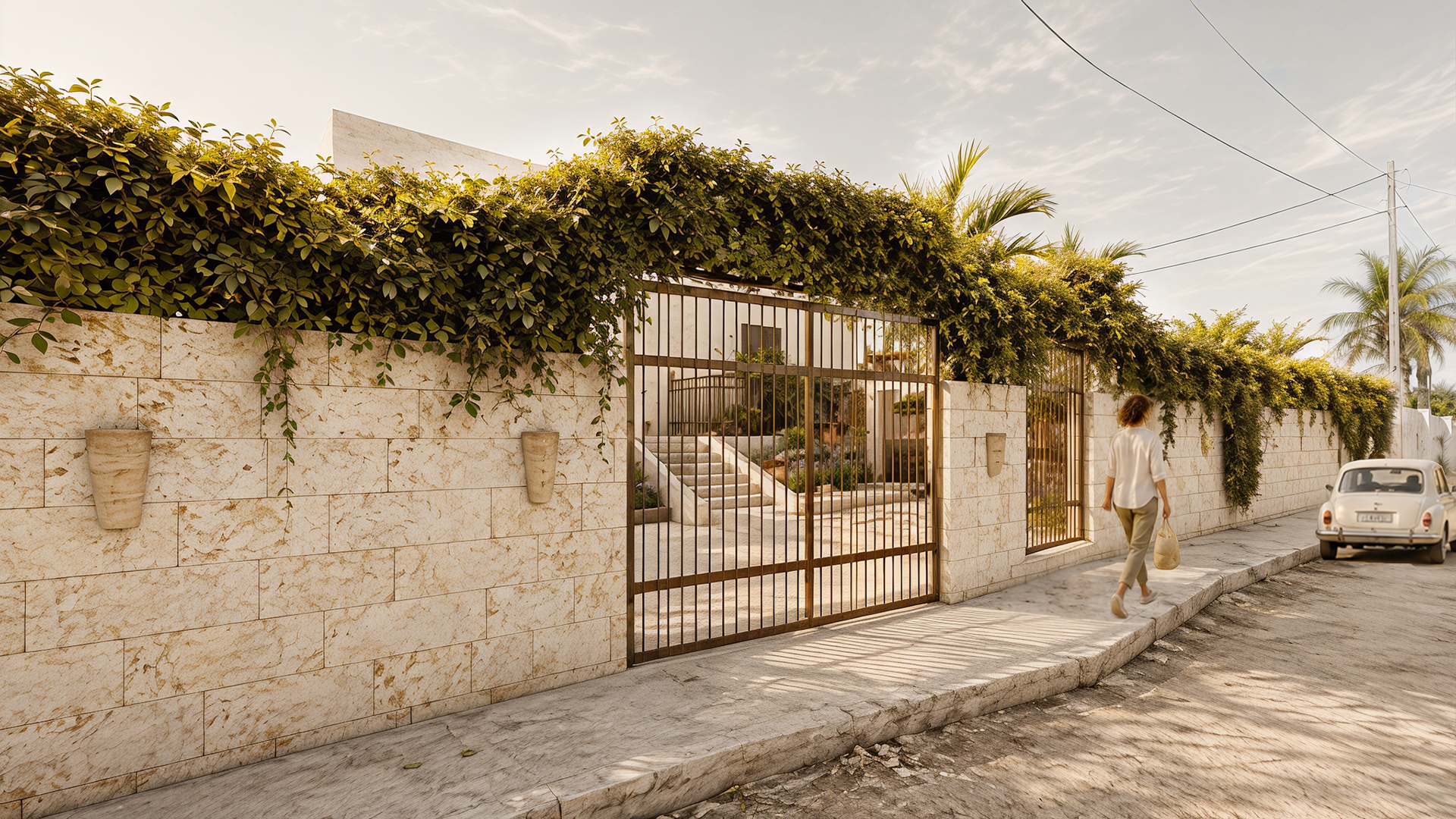
Entrance
Between two houses, the shared boundary becomes a space of care. Lifts allow his carer, Stefano, to move alongside Luigi’s home, observing through openings in the wall and providing support as needed while preserving independence and routine.
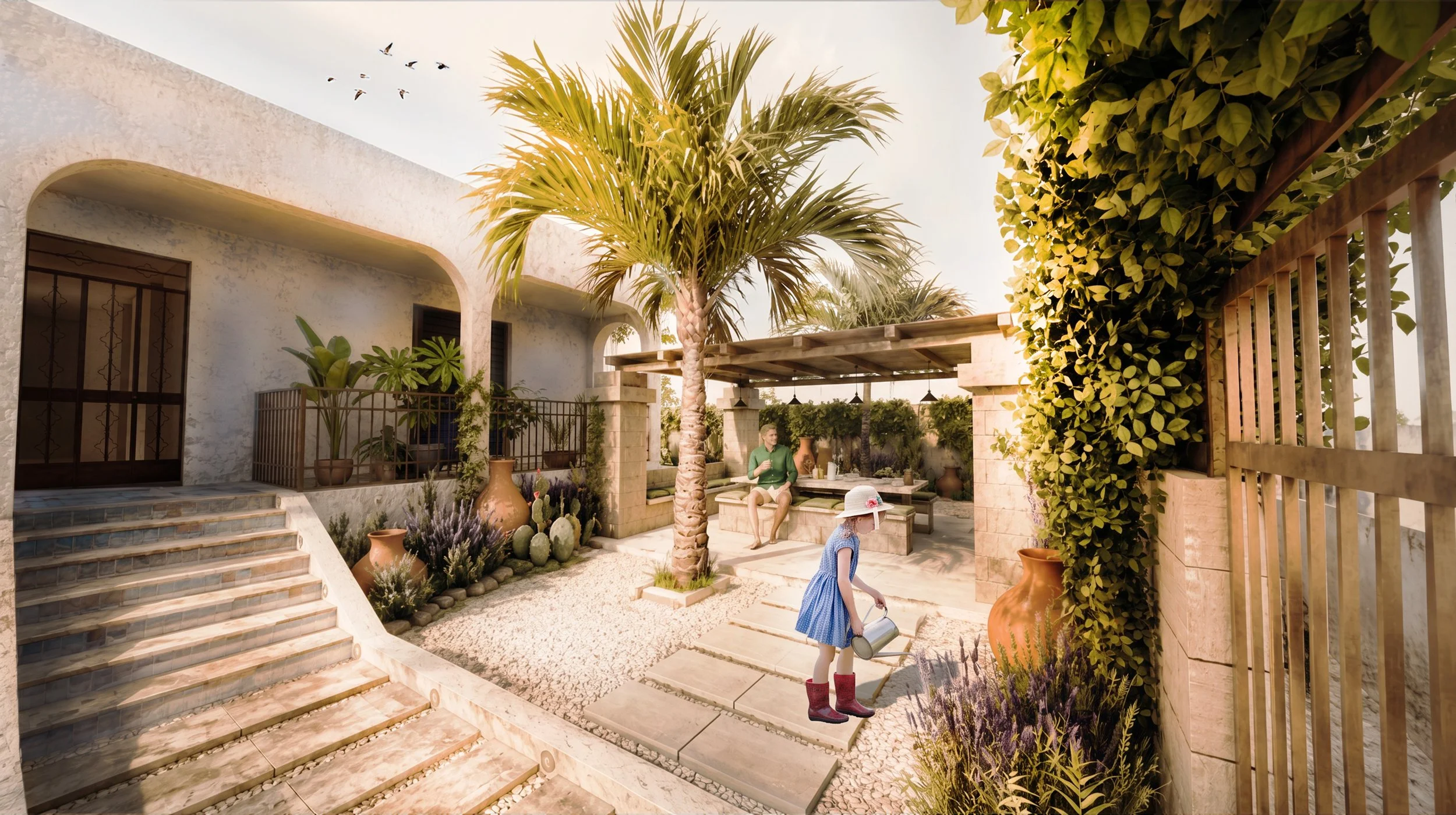
Garden Living
The pergola forms the social heart of the garden, bringing together dining and relaxed seating, while gravel pathways and Mediterranean planting lead towards the plunge pool.
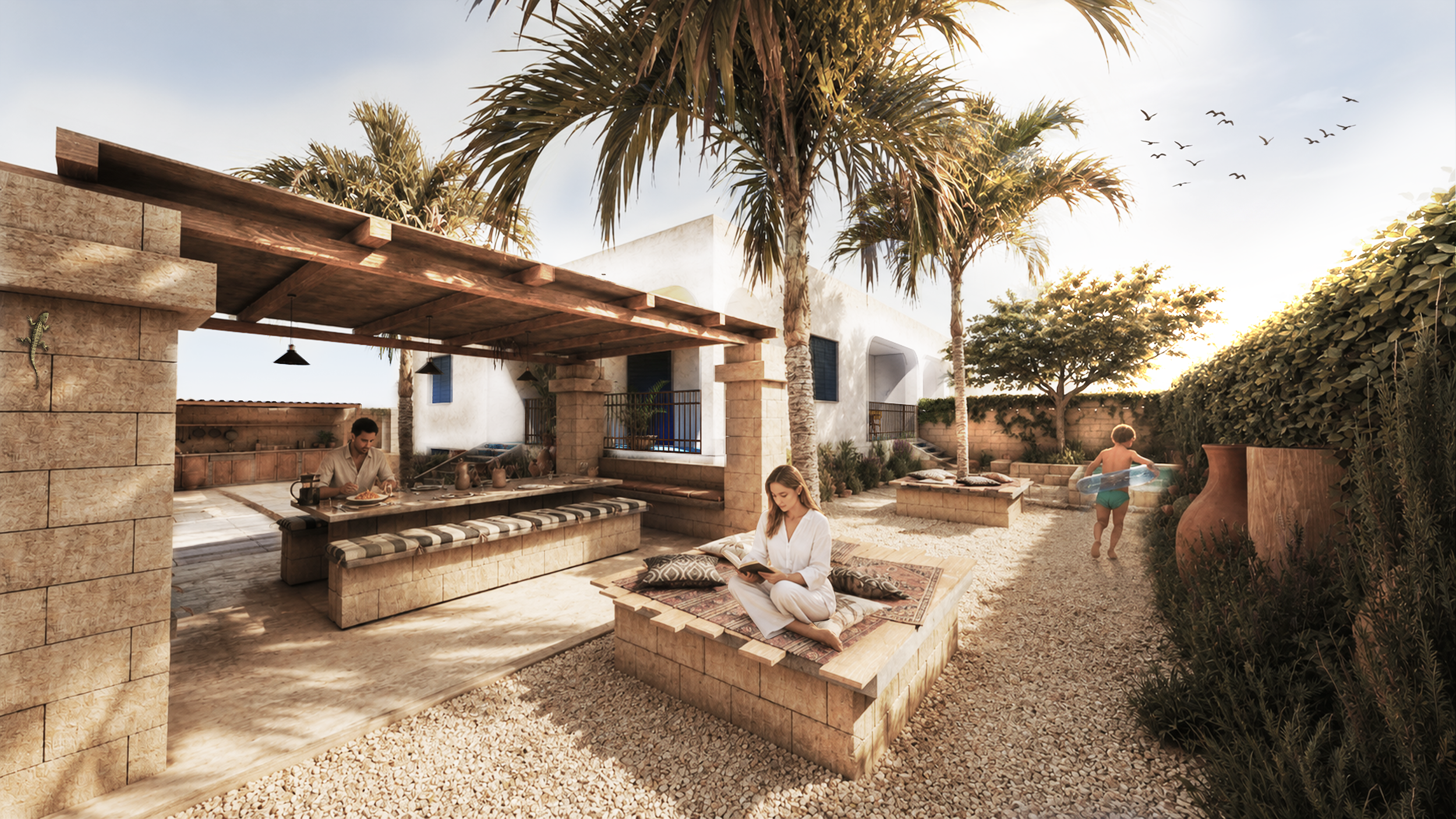
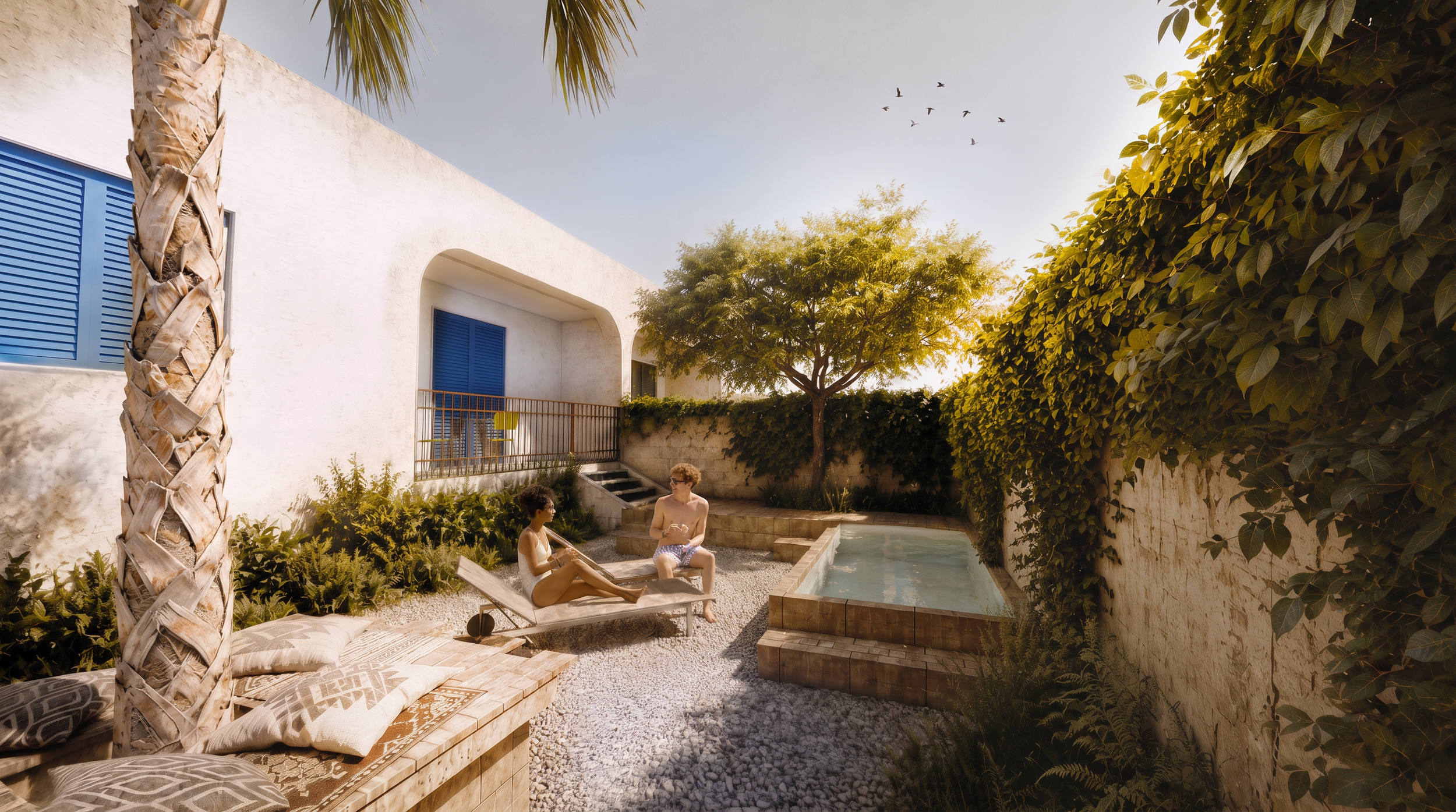
The Plunge Pool
Tucked into the planted edge of the garden, the plunge pool creates a secluded place for cooling and relaxation, framed by gravel, Lecce stone and dense Mediterranean planting.
The Outdoor Kitchen
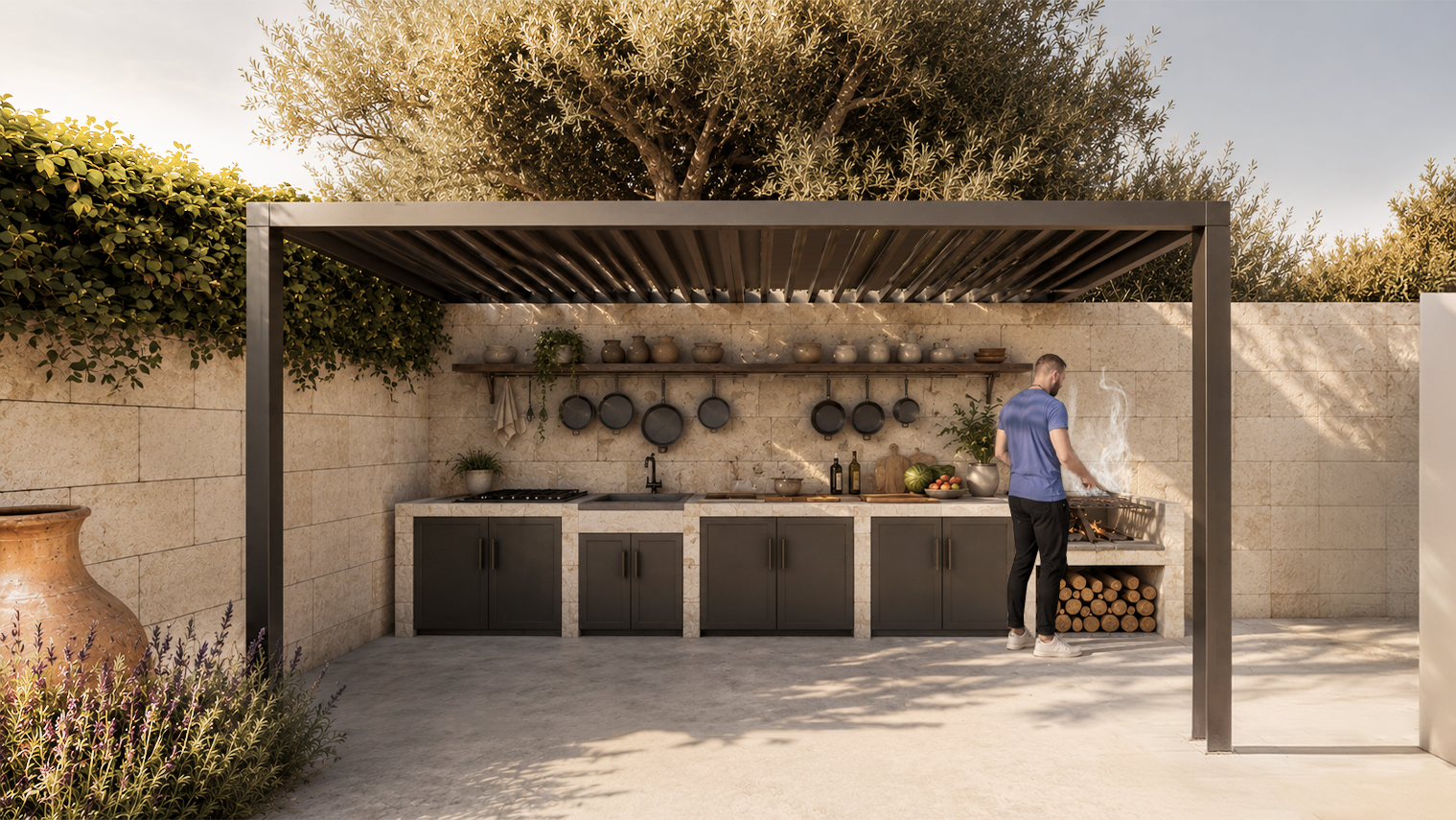
Positioned beside the villa entrance, the outdoor kitchen creates a dedicated space for cooking and entertaining, sheltered beneath an aluminium pergola and framed by Lecce stone and Mediterranean planting.
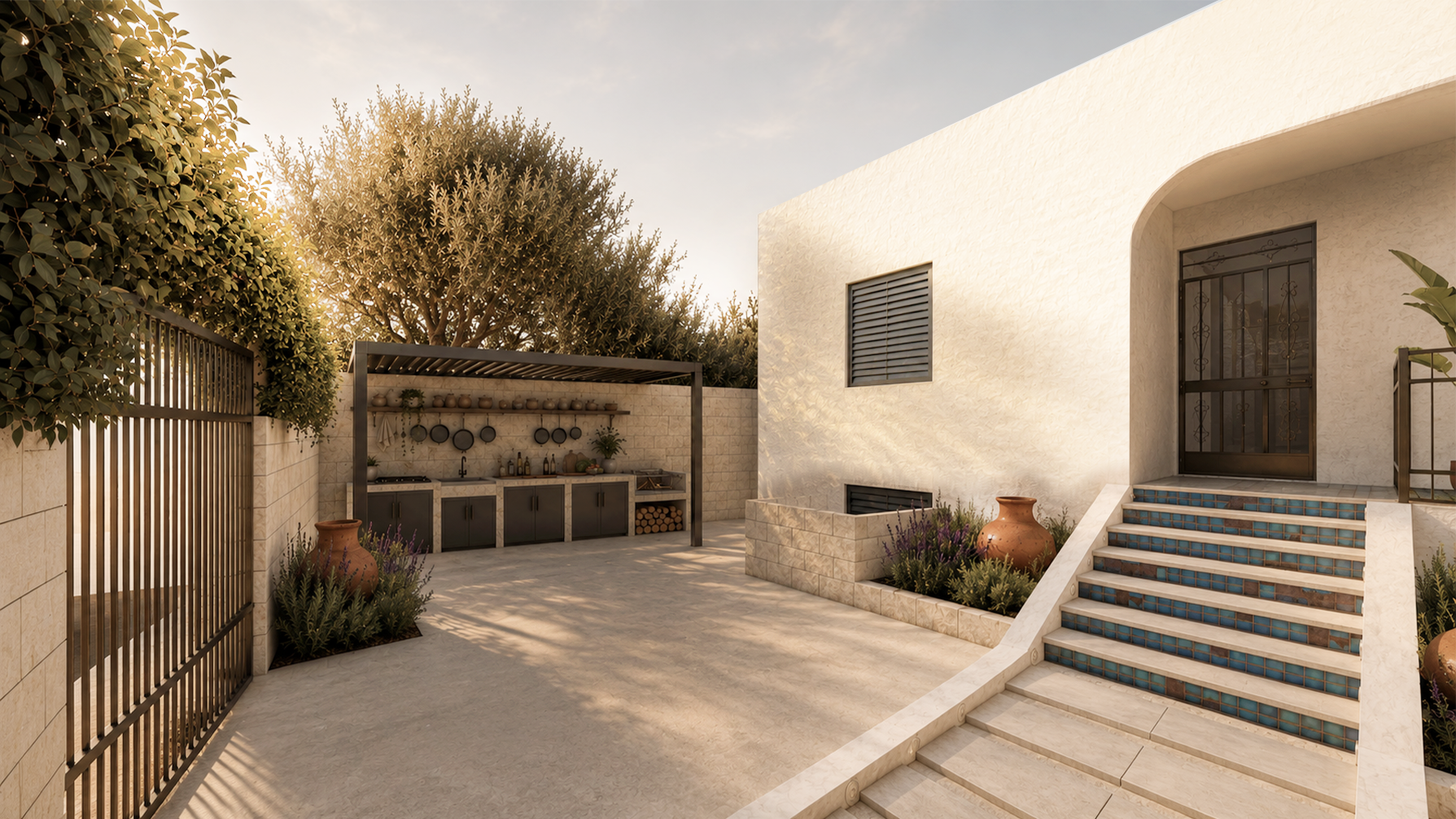
Cooking Under the Pergola
A purpose-built outdoor kitchen combines cooking, preparation and storage beneath a louvred aluminium pergola, creating a shaded space for everyday outdoor living.